Thursday, July 21, 2011

Free Culture for a Free Society

(This article appeared in Infochange India.)

Introduction

On January 31, 2011, there was an unusual meeting at the National Institute of Technology, Calicut, Kerala. The participants were a few young people, some of them activists of the Free Software movement in Kerala – people who were contributing to Free software or to localising Free software in Malayalam. Some of them were interested in animation and one or two of them had some experience in doing 3D animation. What brought them together was a project that had been launched a few months earlier. The project was to create a 3D animation movie as a community effort using Blender and other pieces of Free Software. Blender is a piece of software for doing 3D modelling, animation and even non-linear editing. A piece of proprietary software to begin with, when the company found the going tough, it was taken over by a group that included its developers and the community of users who liked the software. They released it under the GNU General Public Licence, which made it Free software that anyone could download and use. The Blender Foundation that was created to maintain the software subsequently got animators together to create three short animation films – Elephant's Dream, Big Buck Bunny and Sintel – that are available for anyone to download. While the objective of the Blender Foundation was to demonstrate the capabilities of the software, the objective of the young enthusiasts who got together in Calicut, in Kerala (now known as Kozhikode) was to show that cultural products like films could be created by a community and distributed freely – something that goes directly opposite to the existing paradigm of culture being seen as an industry and a means of making profit. The project is called Chamba following the practice started by the Blender Foundation of calling their free movie projects by the names of fruits, and it was started on the suggestion of a young veteran of Free Software, Praveen, who also gave it its name. Details of the project can be found at http://www.chambaproject.in.

Readers may wonder what the purpose of such an exercise is. Creating a movie involves a lot of effort by a number of people, expertise and investment of money. If the product of all this effort and expenditure is distributed freely, how is the money going to be recouped? With little chance of the money being recouped, who is going to invest in the first place? It is quite understandable if people think this wildly Utopian. But such ideas are signs of changing times rather than just Utopian dreams of ideologically motivated and energetic youth. We are in an age when products that used to be made by companies in pursuit of profit are increasingly being created by large groups of individuals just for the fun of doing it. Free Software and Wikipedia are very good examples.

Free Software

About a quarter of a century back, one man decided that software is like knowledge and therefore it should be Free (as in Freedom). That is, software should be available to the user with the freedom to not only use it as (s)he wants, but also to share it, modify it and redistribute it. So he started writing software to be distributed with these freedoms. He called such software Free Software, emphasising whenever possible that the word Free here referred to freedom and not to price (to avoid the confusion, in French they use the word Libre, and in India we call it Swatantra Software). He also formulated a licence under which such software could be distributed. He called it the General Public Licence. It uses the provisions of the copyright laws to make the software available freely rather than to restrict access. He also started an organisation to popularise his ideas. The project to create Free Software was called GNU (short for GNU's Not Unix). The organisation was called the Free Software Foundation (with headquarters in Boston, USA). The conditions in the licence made the software freely (without payment) available too. Which meant that it was not easy for the producers of Free Software to sell it for a price because anyone could download it from the Internet). Thus was born what Yochai Benkler of New York University School of Law called “called commons-based peer production”.

A lot of people at that time thought that this was a crazy idea. “Who would want to create software and give it away for free?” people thought. But gradually more and more people joined him to create what is today a wonderful array of applications and operating systems that are eating into the market of software built and sold by companies. Such software is becoming widely popular not only on servers and personal computers but also on mobile phones. Today, the fastest growing segment in mobile phones is the one that has the Android operating system, which is a piece of Free Software. Firefox, a web browser that is growing rapidly in popularity because of its features and the security from malware that it provides), is another example of Free Software. Other examples are Open Office, a powerful office suite and Apache, a very popular web server that runs about 65% of web pages. Very popular services on the world wide web, such as Google and Yahoo! run on Free Software. The man who started this revolution is Richard Stallman, the leader of the Free Software movement and the hero of millions of Free Software enthusiasts.

Today there are several companies that do business in Free Software. Some of the big names in the business include Red Hat (which was one of the first in the business), Canonical (that created the very popular Ubuntu version of GNU/Linux), and Mandriva (popular among new users). India has its official version of the operating system that was developed by CDAC and Anna University (called Bharath Operating System Solution, or BOSS) that supports all Indian languages by default, and China has its official version, Yellow Dog. Young Indian engineers and students have made it possible for the GNU/Linux desktop to have all menus and icons in Indian languages. All this is possible because of the freedoms enshrined in the licence. Kerala State uses only Free Software in its schools and its policy mandates Free Software for all public purposes. The state has set up the International Centre for Free and Open Source Software (ICFOSS) in Thiruvananthapuram. The Government of Assam is following suit and some other states like Karnataka and Gujarat are also in the process of moving their schools to Free Software. The Government of India itself is considering recommending Free Software for school education. And India is not alone. Many countries from Brazil to Uruguay and China to Venezuela have policies that favour Free Software. Paraguay is in the process of setting up a centre for Free Software. In the country that created computers and the Internet, the President’s Information Technology Advisory Committee recommended in the year 2000 that the federal government back Free software as a strategic national choice to sustain the U.S. lead in critical software development. But more importantly, the Free Software movement has influenced other areas of human activity also. For instance, Samir Brahmachari, the then director of the Institute of Genomic and Integrative Biology (IGIB), a government research laboratory under the Council for Scientific and Industrial Research (CSIR) , launched the open source drug discovery programme in 2007 to see whether it can do for drug research what the Free Software movement did in the software world. But let us focus on the areas of knowledge and culture.

Wikipedia

It was again Stallman who suggested that there should be a Free encyclopedia that should allow anyone to use or share all its contents. That was how Wikipedia was eventually born. Today, Wikipedia is clearly the largest encyclopedia, with articles in more than 250 languages and growing. In English alone, it has more than 3½ million articles. And all the text in it and all the pictures used in it can be freely taken and used by anyone for any purpose. Currently, all the content of Wikipedia is licensed under the Creative Commons Attribution-ShareAlike 3.0 licence. Which means that all the content can be used for any purpose in its original form or modified to suit any purpose without any special permission from its authors. Thus, for instance, one could make a compilation of Wikipedia articles that are relevant for school students and print and sell copies provided the attribution criteria specified in the licence are met. One could even translate the articles into any language and distribute them as long as the simple guidelines in the licence are followed. One may wonder how reliable the information provided in Wikipedia is. A study conducted by the science journal Nature some time back showed that the errors in Wikipedia are not very much more than those in Encyclopedia Britannica. That should hardly be worrying.

So who contributed all these articles to Wikipedia? They were all written by people like us, people who thought it worthwhile spending some time for common cause. People who didn't think that everything they do should get them money. They were people who found pleasure in contributing to a common cause, and the pleasure was what they got in return. It is unfortunate that a lot of people today think that the only return they can get is in terms of money, and forget that most of us do a lot of things just for the sake of the pleasure it gives us. Think of gardening, or painting or even creative writing (such as poetry or fiction). There are individuals who have very responsible jobs who still enjoy simple things like gardening. Or cooking. Or even driving their own cars! Thus, if a professor of history spends some time writing an article for Wikipedia, he may not only enjoy it, but it could become a resource for his classes that he could tell his students to read. The fact that so many articles got written in so many languages is a strong indication that people do find it interesting and useful to contribute to a community project like Wikipedia. And that too without any expectation of monetary gains or even name and fame! This would have been unimaginable some time back. People have doubted the reliability of the information available in Wikipedia. Not any more. A study by the well-known science journal Nature based on 2,000 articles some time back found that Wikipedia articles had just four errors on the average while the revered Encyclopedia Britannica had three! And recently, a peer-reviewed study by Adam Brown, a political scientist in Brigham Young University, has found that Wikipedia is a reliable place to get political information. And the phenomenon of Wikpedia, its way of functioning, how the communities resolve conflicts and so on have become topics of detailed study in the academic world. Another outstanding example of commons-based peer-production.

Copyright

A natural question would be, “So what about copyright?” Today, copyright is taken as an automatic right that any creator gets almost as a return for his creation. As Lawrence Liang writes, “The greatest success of the concept of copyright has been its successful elevation to the status of myth through the constant rendering of certain familiar figures (the poor struggling author), arguments (people deserve to own the fruit of their labour) and rhetorical data (billions of dollars lost due to piracy).” (http://www.countercurrents.org/hr-suresh010205.htm)

It is interesting to see how the copyright law came into being. It was Queen Anne (1665-1714) of England who first promulgated a law that is close to today's copyright law. Known as the Statute of Anne, it gave the authors the right to give permission to printers to print and sell their works. This itself was a result of exclusive rights given earlier to publish books in England, with the aim of controlling what books got published. It may be best to quote Wikipedia here (http://en.wikipedia.org/wiki/Statute_of_Anne):

The origins of copyright law in most European countries lies in efforts by governments to regulate and control the output of printers. The technology of printing was invented and widely established in the 15th and 16th centuries. Before the printing press, writings could only be physically multiplied by the highly laborious and error-prone process of manual copying out. Printing allowed for multiple exact copies of a work, leading to a more rapid and widespread circulation of ideas and information. While governments and church in many ways encouraged printing, which allowed the dissemination of Bibles and government information, works of dissent and criticism could also circulate rapidly. As a consequence, governments established controls over printers across Europe, requiring them to have official licences to trade and produce books. The licenses typically gave printers the exclusive right to print particular works for a fixed period of years, and enabled the printer to prevent others from printing the same work during that period. The licenses could only grant rights to print in the territory of the state that had granted them, but they did usually prohibit the import of foreign printing.

In England the printers, known as stationers, formed a collective organisation, the Worshipful Company of Stationers and Newspaper Makers, commonly known as the Stationers' Company. In the 16th century the Stationers' Company was given the power to require all lawfully printed books to be entered into its register. Only members of the Stationers' Company could enter books into the register. This meant that the Stationers' Company achieved a dominant position over publishing in 17th century England (no equivalent arrangement formed in Scotland and Ireland). But the monopoly, granted to the Stationers' Company through the Licensing Act 1662, came to an end when parliament decided not to renew the Act after it lapsed in May 1695.”

With Queen Anne on the throne, the new joint parliament of England and Scotland passed the Copyright Act 1709 (formal title: An Act for the Encouragement of Learning, by vesting the Copies of Printed Books in the Authors or purchasers of such Copies, during the Times therein mentioned), commonly known as the Statute of Anne. The Act came into effect in 1710.

The stated purpose of the law was the “encouragement of learned men to compose and write useful books”. This was obviously not seen as a natural right, but as an “encouragement to learned men” so that society will benefit from their work. The “encouragement” was in the form of a share of the profit from selling the printed copies of their works. And the monopoly right of the author was to extend for a period of 14 years, with the possibility of extending it for 14 years more.

The copyright law was eventually adopted by many other countries and are enforced by treaties such as the Berne Convention of 1886 (later revised several times) and the Geneva Convention of 1952. It went through several changes and today provides monopoly rights to the copyright holder for a period up to 60 years after the death of the author in some countries.

Many people do not find it reasonable to enforce monopoly for such long periods. And many people believe that any new work only builds on the existing. In other words, nothing is entirely new. The proponents of monopoly restrictions that last for long, or even perpetually, argue that such laws would help the arts by forcing people to innovate and come up with something original and not just reuse existing work. But opponents point out that no work is really original. “The image of the author as a wellspring of originality, a genius guided by some secret compulsion to create works of art out of a spontaneous overflow of powerful feelings, is an 18th century invention”, they say (Anna Nimus: Copyright, Copyleft and the Creative Anti-Commons). And remember Sir Isaac Newton's famous words, “If I have seen a little further it is by standing on the shoulders of Giants” in a letter to Robert Hooke on 16 February 1676. He was, in fact, referring to an old Latin metaphor (nanos gigantium humeris insidentes) meaning “One who develops future intellectual pursuits by understanding the research and works created by notable thinkers of the past.”

Culture in the Age of ICT

Whatever that may be, we know that great music and great literature were born in India, and other countries for that matter, when there was no copyright law. The creators were often supported by kings, or even by the public (Thiagaraja abjured a life in a king's court, for example). The kings have gone, and we have governments of the people, by the people and for the people in their places. They can, and should, support the creators who need support. If not the public can. And the public do, as the case of the music group Radio Head shows.

Radiohead are an English alternative rock band from Abingdon, Oxfordshire. Formed in 1985, Radiohead were ranked 73 in Rolling Stone's list of “The Greatest Artists of All Time” in 2005. Their first six albums sold more than 25 million copies by 2007. They independently released their seventh album, In Rainbows (2007), originally as a digital download on their own website. There was no physical form, such as a CD, in which people could buy the album and there was none of the big labels. It was available just in digital form for which customers could set their own price or not pay at all! The site just said, “it's up to you”. “It's the first major album whose price is determined by what individual consumers want to pay for it. And it's perfectly acceptable to pay nothing at all.” said Time magazine. Apparently, the first day saw 1.2 million downloads! Sold in physical form later, in December 2007 in the UK and in January 2008 in the US, the record topped the sales in both countries, demonstrating that free downloads do not affect sales of CDs. And that big labels are not essential. The recording industry was shocked. Many felt this was another death knell for the industry. An executive apparently said, “If the best band in the world doesn't want a part of us, I'm not sure what's left for this business.” Perhaps the industry needs to “actively examine alternative models through which we can understand the production and dissemination of knowledge and culture.” as Lawrence Liang put it (http://www.countercurrents.org/hr-suresh010205.htm). And also read Yochai Benkler Professor of Law at New York University School of Law.

Free Culture

At the level of institutional design, the emergence of commons-based peer production adds a new and deep challenge to the prevailing policy of rapid expansion of the scope of exclusive rights in information and culture that has been the predominant approach in the past 25 years ” says Yochai Benkler (Coase’s Penguin, or, Linux and The Nature of the Firm, 2002). (He was talking about Free software that has emerged “as a substantial force in the software development world ”. Wikipedia was just a year old and was just beginning to take the first steps. Youtube was yet to be conceived.) This fact needs to be recognised, whether we like it or not. Modern technology, particularly IT, is enabling individuals to do many things themselves that earlier could be done only by professionals. Today, for instance, anyone with some skills in using a computer can easily create good-looking documents and print them out at home, even make exact copies and distribute, which was not even imaginable before computers became available freely and at such low prices. Today, school students are making movies with simple and relatively inexpensive equipment, and anyone with the time and the inclination can create an animation movie using pieces of Free Software. Such films may not be of sufficient quality for screening in large theatres, but today a lot of people see more films on their computers or television sets than in the theatres. We need to recognise that developments in technology are changing the way we do things, and this could pose a threat to establishments that have been in business for long, just as painters who used to hand paint sign boards were thrown out of their means of livelihood when these began to be printed. Or type setters lost their jobs to computers.

It is understandable that the culture industry would try to resist this to the best of their abilities just as the music industry, it is said, once tried to prevent the then new technology of the tape recorder because it threatened their existence. That, fortunately, did not happen. They would probably have been happy if every technological development that helped to free music from their clutches could have been banned. But it is clear that no one can stop new technology being introduced. With each new development, music became more accessible to the people – whether it be radio, tape recorder, cassette recorder, CD, flash drive or whatever. Today, it is a simple thing to carry a few thousand songs in your shirt pocket and listen to them wherever you are, whenever you want to. And digital technology has made it a simple matter to share songs, videos, films or whatever. Websites like Youtube allow people to upload their own videos so that anyone with a computer and an Internet connection can watch them. And some of them are now being used even by television channels!

And people have started making films and putting them up on web sites so that anyone can download and watch them. RiP!: A Remix Manifesto is a 2008 open source documentary film about “the changing concept of copyright” directed by Brett Gaylor. Created over a period of six years, the documentary film features the collaborative remix work of hundreds of people who have contributed to the Open Source Cinema (http://en.wikipedia.org/wiki/Open_Source_Cinema) website, helping to create the “world's first open source documentary” as Gaylor put it. Elephant's Dream, Big Buck Bunny, and Sintel were created by the Blender Foundation and put on the Net for anyone to download and use. The Wikipedia page http://en.wikipedia.org/wiki/Open_source_film lists fifteen films that are free as in freedom, a couple of them in production. Not only are they freely downloadable, but their sources are also downloadable and reusable. So that, if anyone wants to, they can be mixed and matched to create a new film!

Digital technology brought about a revolution in the way we think, the way we learn and the way we do things. Free Software brought about a revolution in the way digital resources are created and distributed, freeing them from restrictions imposed by the creators. It converted the creation of software and other digital resources into a community affair, thus empowering the users and giving them a say in what shape the final product will take. But it also set up a wider revolution – another one in the way we think and the way we do things. Ideas like Wikipedia and Creative Commons are a consequence. The Chamba project indicates that this revolution is now reaching India too.

(This article is published under the Creative Commons Attribution Share-Alike Licence (CC by-sa) India 2.5. The article may be reproduced by anyone in any medium as it is or in modified form provided the source is indicated and this note is included. See http://creativecommons.org/licenses/by-sa/2.5/in/deed.en)

Monday, May 02, 2011

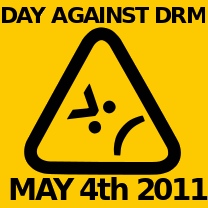
World-wide day for action against DRM


Yellow banner -- May 4th, 2011: Day Against DRM


FSF is observing May 4 as the World-wide day for action against DRM (Digital Restrictions Management, as we call it). Come join us. See http://www.defectivebydesign.org/2011-day-against-drm-action-ideas

* Sign-up to our 2011 Day Against DRM mailing list https://crm.fsf.org/civicrm/profile/create?gid=28
* Make plans on the 2011 Day Against DRM wiki page. http://libreplanet.org/wiki/Group:DefectiveByDesign/Day_Against_DRM_2011

Monday, April 11, 2011

Some thoughts on ICT and Education

These are just some thoughts that came to my mind on reading the new draft policy on ICT and Education of the Government of India.

1. Our education system attempts to provide the same kind of education throughout the country through institutions such as the CBSE and ICSE, while, in the states, every child studies the same material irrespective of his/her immediate society. Thus, a tribal child studies the same things as the urban child and a fisherman's child. While this is certainly desirable to a certain extent, the child acquires few skills needed to live in its surroundings and can get easily alienated from its immediate society. In fact, the curricula is biased towards the needs of the urban child, thus even alienating the rural child from the school curriculum. This is an issue that has occasionally been discussed by our education experts. To an extent, it has been rather difficult to tailor the curriculum to suit the needs of the children in different parts of the country.

Now ICT provides a means of providing appropriate curricula to children in each corner of the country. While there has to be a common curriculum for the entire country, a part can be common just to each state and another part can be customised for each part of the state. For example, while there can be a common curriculum in, say, English, Science and Mathematics for the whole country, the local language varies from state to state, history should have a certain amount of local content (say, 20%), and there can be some material of local relevance in each region (say, 5% overall) apart from history that may be decided in consultation with local people. With ICT, it is possible to plan, create and deliver such diverse curricula and evaluate the students on their achievements too without much difficulty. The national policy should have such goals as its ultimate targets.

2. Any education system is naturally aimed at the average student. As a result, students who have much lower learning abilities and those who are exceptionally brilliant suffer. Students who find it difficult to cope with the curriculum are often helped by providing separate, and sometimes personalised, tuitions. But exceptionally bright students often suffer boredom, eventually lose interest in studies and perform badly in their examinations. This is particularly sad because society loses its brightest brains. Perhaps, this is one of the reasons for India not producing as many outstanding scholars and innovators as it should have considering the high number of scientists and researchers it is producing.

Here again, ICT can provide a way out by offering students opportunities to explore the subjects beyond what their curricula demand, thus satisfying the needs of the exceptionally bright children. By providing a way for them to satisfy their curiosity and explore avenues for knowledge beyond their text books, their minds are kept busy and free of ennui, and they feel a sense of achievement that could drive them to achieve more. With the help of ICT, all this can be done and even the evaluation process can be personalised, providing a "flat" playing ground for all students and making them most useful for society.

3. Another area where ICT should be roped in is in helping children with learning and physical disabilities. Conditions like Dyslexia and Autism are supposed to affect 5 to 10 percent of children in any population. As a nation, we have not been paying much attention to the needs of such children. ICT can be of help in the education of such children. Interestingly, there are people in India who have been working to develop this technology for the education of people with such disabilities. A large fraction of our people, including school teachers, is still unaware of such conditions and tend to punish the children for not performing well. This is a tragedy. They are individuals who can contribute much to society, as much or more than other "normal" individuals. It is time for the Government of India, and the governments in the states, to start paying attention to such issues, educating teachers and parents about learning disabilities and educating them on how to handle such children.

Similarly, ICT can help children with physical disabilities (including blindness and malformed or absence of hands) to lead a more normal life and learn like other students. Again, pieces of Free Software such as Orca (screen reader) are extremely useful not only because they are available free of cost but also they allow us to customise them for the number of different languages and dialects in the country. The proprietary equivalents are not only extremely expensive but also do not allow customisation for our languages. It is time that the Ministry for Human Resource Development looked into these matters and adopted a policy that will be of relevance to them.

Tuesday, December 28, 2010

സ്വതന്ത്രസോഫ്റ്റ്‌വെയറും വിദ്യാഭ്യാസവും

(തേജസ് പത്രത്തില്‍ ഒക്ടോബര്‍ 2010ല്‍ പ്രസിദ്ധീകരിച്ച ലേഖനം)

ഇക്കഴിഞ്ഞ സെപ്റ്റംബര്‍ 10-12 തീയതികളില്‍ കോഴിക്കോട്ടുള്ള നാഷണല്‍ ഇന്‍സ്റ്റിറ്റ്യൂട്ട് ഓഫ് ടെക്നോളജിയില്‍ വെച്ചു് സ്വതന്ത്ര സോഫ്റ്റ്‌വെയറും വിദ്യാഭ്യാസവും എന്ന വിഷയത്തെപ്പറ്റി ഒരു സമ്മേളനം നടന്നു. അതു് സംഘടിപ്പിക്കുന്നതില്‍ ഈ ലേഖകനു് ഒരു പ്രധാന പങ്കുണ്ടായിരുന്നു. 10-ാം തീയതി വൈകിട്ടു് സ്വതന്ത്ര സോഫ്റ്റ്‌വെയര്‍ പ്രസ്ഥാനത്തിന്റെ സ്ഥാപക നേതാവായ റിച്ചാര്‍ഡ് സ്റ്റാള്‍മാന്റെ മുഖ്യപ്രഭാഷണത്തോടെ ആരംഭിച്ച സമ്മേളനം സ്ഥലത്തെ നിയമസഭാംഗമായ ശ്രീ പ്രദീപ് കുമാറാണു് ഉത്ഘാടനം ചെയ്തതു്. ഈ സമ്മേളനത്തിന്റെ പശ്ചാത്തലത്തില്‍ അവിടെ ചര്‍ച്ചചെയ്ത വിഷയത്തെപ്പറ്റി ഒരു വിലയിരുത്തല്‍ നടത്താം.

കേരളത്തിലുള്ളവരെ സ്വതന്ത്ര സോഫ്റ്റ്‌വെയര്‍ പരിചയപ്പെടുത്തേണ്ട ആവശ്യമുണ്ടെന്നു തോന്നുന്നില്ല. നമ്മുടെ പള്ളിക്കൂടങ്ങളിലെല്ലാം ഉപയോഗിക്കുന്നതു് സ്വതന്ത്ര സോഫ്റ്റ്‌വെയറാണല്ലോ. എങ്കിലും എന്താണു് സ്വതന്ത്ര സോഫ്റ്റ്‌വെയര്‍ എന്നു് വിശദീകരിക്കട്ടെ. കമ്പോളത്തില്‍ വിറ്റഴിക്കുന്ന സോഫ്റ്റ്‌വെയറുകള്‍ ഉപയോക്താക്കള്‍ക്കു് സ്വാതന്ത്ര്യം നല്‍കുന്നവയല്ല. ഒരു നിശ്ചിത എണ്ണം കമ്പ്യൂട്ടറുകളില്‍ ഉപയോഗിക്കാനുള്ള അവകാശം മാത്രമാണു് അവയുണ്ടാക്കുന്ന കമ്പനികള്‍ ഉപയോക്താക്കള്‍ക്കു് നല്‍കുന്നതു്. മാത്രമല്ല, മനുഷ്യര്‍ക്കു് പഠിക്കാനാകുന്ന സോഫ്റ്റ്‌വെയറിന്റെ മൂലരൂപമായ സോഴ്സ് കോഡ് അവര്‍ പരമരഹസ്യമാക്കി വച്ചിരിക്കുകയാണു്. അതുകൊണ്ടു തന്നെ സോഫ്റ്റ്‌വെയറില്‍ എന്തെങ്കിലും മാറ്റം വരുത്തണമെന്നു് ഒരു ഉപയോക്താവിനു് തോന്നിയാലും അതു് ചെയ്യാനാവില്ല. എത്ര കമ്പ്യൂട്ടറുകളില്‍ വേണമെങ്കിലും ഏതാവശ്യത്തിനും ഉപയോഗിക്കാനും മറ്റുള്ളവര്‍ക്കു് പകര്‍ന്നു കൊടുക്കാനും മൂലരൂപം വായിച്ചു് പഠിക്കാനും അതില്‍ മാറ്റം വരുത്താനും എല്ലാം സ്വാതന്ത്ര്യം നല്‍കുന്ന സോഫ്റ്റ്‌വെയറാണു് സ്വതന്ത്ര സോഫ്റ്റ്‌വെയര്‍. 1983 സെപ്റ്റംബറില്‍ റിച്ചാര്‍ഡ് സ്റ്റാള്‍മാനാണു് ഇതിനു് തുടക്കം കുറിച്ചതു്.

വിവരവിനിമയ സാങ്കേതികവിദ്യ, അഥവാ ഐ.സി.റ്റി (Information Communication Technology, ICT) എന്നതു് മനുഷ്യന്‍ വികസിപ്പിച്ചെടുത്തിട്ടുള്ള സാങ്കേതിക വിദ്യകളില്‍വച്ചു് ഏറ്റവും കൂടുതല്‍ സാദ്ധ്യതകളുള്ളതും നമ്മുടെ ജീവിതത്തെ സ്വാധീനിക്കാന്‍ ഏറ്റവും കഴിവുള്ളതും ആയവയില്‍ ഒന്നാണെന്നു പറയാം. നമ്മള്‍ കാര്യങ്ങള്‍ ചെയ്യുന്നതിനെയും ചിന്തിക്കുന്നതിനെ പോലും വല്ലാതെ സ്വാധീനിക്കാന്‍ ഈ സാങ്കേതികവിദ്യയ്ക്കു് കഴിഞ്ഞിരിക്കുന്നു. സന്ദേശങ്ങള്‍ കൈമാറുന്നതു മുതല്‍ അച്ചടി, ഛായാഗ്രഹണം, സംഗീതരചന, ചലച്ചിത്രനിര്‍മ്മാണം എന്നിങ്ങനെ നമ്മുടെ മിക്ക കര്‍മ്മരംഗങ്ങളെയും കമ്പ്യൂട്ടര്‍ മാറ്റിമറിച്ചിരിക്കുന്നു. ഉദാഹരണമായി, കടകളുടെ മുന്നില്‍ വയ്ക്കുന്ന ചെറിയ ബോര്‍ഡുകള്‍ മുതല്‍ വലിയ പരസ്യബോര്‍ഡുകള്‍ വരെ ഒന്നും ആരും ഇപ്പോള്‍ കൈകൊണ്ടു് എഴുതാറില്ല. സെല്‍ഫോണ്‍ മുതല്‍ വാഷിങ്ങ് മഷീന്‍ വരെ പല ഉപകരണങ്ങളിലും ഇന്നു് കമ്പ്യൂട്ടറിന്റെ ചെറിയ രൂപം കാണാനാവും. ഇത്രയധികം സാദ്ധ്യതകളുള്ള ഒരു സാങ്കേതികവിദ്യ വിദ്യാഭ്യാസത്തിലും സ്വാധീനം ചെലുത്താതിരുന്നാലേ അത്ഭുതമുള്ളൂ.

വിദ്യാഭ്യാസത്തില്‍ ഐസിറ്റിയ്ക്കു് വ്യത്യസ്തമായ രണ്ടു് പങ്കുകളുണ്ടു്. ഒന്നു്, കമ്പ്യൂട്ടറിനെയും ഇന്റര്‍നെറ്റിനെയും കുറിച്ചു് പഠിപ്പിക്കുന്നതിലാണു്. രണ്ടു്, എല്ലാ വിഷയങ്ങളും പഠിപ്പിക്കുകയും പഠിക്കുകയും ചെയ്യുന്നതു് എളുപ്പമാക്കാനാണു്. ആദ്യത്തേതിനെ ഐസിറ്റി വിദ്യാഭ്യാസമെന്നും (ICT education) രണ്ടാമത്തേതിനെ ഐസിറ്റി സഹായത്തോടെയുള്ള വിദ്യാഭ്യാസമെന്നും (ICT enabled education) വിളിക്കാം. ഐസിറ്റി വിദ്യാഭ്യാസത്തില്‍ രണ്ടു ഭാഗങ്ങളുണ്ടു് --- ഹാര്‍ഡ്‌വെയറും സോഫ്റ്റ്‌വെയറും. ഹാര്‍ഡ്‌വെയറിന്റെ ഉത്പാദനത്തിനു് സങ്കീര്‍ണ്ണമായ സാങ്കേതികവിദ്യ ആവശ്യമാണു്. അതിനു് സങ്കീര്‍ണ്ണമായ ഉപകരണങ്ങളും ആവശ്യമാണു്. അതുകൊണ്ടുതന്നെ അതു് ചില രാജ്യങ്ങള്‍ക്കു മാത്രമെ സാധ്യമായിട്ടുള്ളൂ. എന്നാല്‍ സോഫ്റ്റ്‌വെയറിന്റെ കാര്യം അങ്ങനെയല്ല. അവിടെ ഏറ്റവും ആവശ്യമായതു് അറിവാണു്. ഒരു കമ്പ്യൂട്ടറും പ്രോഗ്രാമിങ്ങിലുള്ള അറിവും ഉണ്ടെങ്കില്‍ ആര്‍ക്കും സോഫ്റ്റ്‌വെയര്‍ സൃഷ്ടിക്കാം. കമ്പ്യൂട്ടറിനു് വില കുറഞ്ഞുവരുന്ന ഈ കാലഘട്ടത്തില്‍ ഇതൊരു വലിയ കടമ്പയല്ല. ഐസിറ്റി വിദ്യാഭ്യാസത്തിന്റെ ഒരു പ്രധാന ഭാഗം അതുകൊണ്ടു് ആര്‍ക്കും സാധ്യമായതാണു്.

നമ്മള്‍ വിദ്യാര്‍ത്ഥികളെ കമ്പ്യൂട്ടര്‍ സോഫ്റ്റ്‌വെയര്‍ നിര്‍മ്മിക്കാന്‍ എങ്ങനെയാണു് പ്രാപ്തരാക്കേണ്ടതു്? ഇപ്പോള്‍ തുടര്‍ന്നുപോകുന്ന രീതി അവരെ പ്രോഗ്രാമിങ്ങ് ഭാഷകള്‍ പഠിപ്പിക്കുക എന്നുള്ളതാണു്. C, C++. Java തുടങ്ങി പല ഭാഷകള്‍ പ്രചാരത്തിലുണ്ടു്. ചെറിയ കുട്ടികളെ മലയാള അക്ഷരങ്ങളും വാക്കുകളും മറ്റും പഠിപ്പിക്കുന്നതുപോലെ വിദ്യാര്‍ത്ഥികളെ ഈ ഭാഷകളിലെ പദങ്ങളും അവയുടെ വ്യാകരണവും പഠിപ്പിക്കുക എന്നതാണു് ഇപ്പോള്‍ ചെയ്തുവരുന്നതു്. എന്നാല്‍ അതുകൊണ്ടു് ഭാഷാപഠനം ആയോ എന്നു് നമ്മള്‍ ചിന്തിക്കേണ്ടതാണു്. ഏതു് ഭാഷയിലും ഉപരിപഠനത്തിനു് തയാറാകുന്ന വിദ്യാര്‍ത്ഥികള്‍ ആ ഭാഷയിലെ സാഹിത്യവും പഠിക്കുന്നുണ്ടു്. ഭാഷ ഉപയോഗിക്കുന്നതില്‍ അതിസമര്‍ത്ഥരായവര്‍ എങ്ങനെയാണു് എഴുതുന്നതു് എന്നു് നേരിട്ടനുഭവിച്ചറിയാനാണല്ലോ സാഹിത്യം പഠിക്കുന്നതു്. അതുപോലെ, സിനിമ പഠിക്കുന്നവര്‍ പ്രഗത്ഭരായ സംവിധായകരുടെയും മറ്റും ചലച്ചിത്രങ്ങളെ പാഠപുസ്തകങ്ങള്‍ എന്നവണ്ണം പഠിക്കുന്നു. ഐസന്‍സ്റ്റൈനും ഗൊദാര്‍ദും റേയും ഘട്ടക്കും ഒക്കെ അവര്‍ക്കു് പാഠങ്ങളാണു്. അപ്പോള്‍ പ്രോഗ്രാമിങ്ങ് ഭാഷ പഠിക്കുമ്പോഴും അതില്‍ പ്രഗത്ഭരായവരുടെ കൃതികള്‍ പഠിക്കേണ്ടതല്ലേ?

ഇതു് സാദ്ധ്യമാകുന്നതു് സ്വതന്ത്ര സോഫ്റ്റ്‌വെയറിന്റെ ലോകത്തു് മാത്രമെയുള്ളൂ എന്നു് വ്യക്തമാണല്ലോ. കാരണം കമ്പനികള്‍ നിര്‍മ്മിച്ചു വിലയ്ക്കു് വില്‍ക്കുന്ന സോഫ്റ്റ്‌വെയറിന്റെ മൂലരൂപം അവര്‍ ഒളിച്ചു വച്ചിരിക്കുകയാണു്. അതു് മറ്റാര്‍ക്കും കാണാനാവില്ല. ആ നിലയ്ക്കു് എത്ര പ്രഗത്ഭരായ പ്രോഗ്രാമര്‍മാര്‍ കച്ചവട സോഫ്റ്റ്‌വെയര്‍ രചിച്ചിട്ടുണ്ടെങ്കിലും അതിന്റെ മൂലരൂപം കണ്ടു പഠിക്കാന്‍ വളര്‍ന്നുവരുന്ന പ്രോഗ്രാമര്‍മാര്‍ക്കാവില്ല. അതുകൊണ്ടുതന്നെ വിദ്യാഭ്യാസത്തില്‍ സ്വതന്ത്രസോഫ്റ്റ്‌വെയര്‍ ഉപയോഗിക്കേണ്ടതു് അത്യാവശ്യമാണു്. എന്നാല്‍ അതിനു് മറ്റു കാരണങ്ങളുമുണ്ടു്. ഗ്നു ലിനക്സ് പോലെയുള്ള ഒരു സ്വതന്ത്ര ഓപ്പറേറ്റിങ്ങ് സിസ്റ്റത്തിന്റെയും ഫയര്‍ഫോക്സ് പോലെയുള്ള വെബ് ബ്രൌസറിന്റെയും പ്രവര്‍ത്തനരീതിയും വിശദാംശങ്ങളും ആര്‍ക്കും പഠിക്കാവുന്നതാണു്. ഒരു കാറിന്റെ പ്രവര്‍ത്തനം മനസിലാക്കാന്‍ അതിന്റെ ഭാഗങ്ങള്‍ വേര്‍പെടുത്തിയെടുത്തു് പഠിക്കുന്നതുപോലെ ഇത്തരം ഒരു സോഫ്റ്റ്‌വെയറിന്റെ പ്രവര്‍ത്തനം പഠിക്കാന്‍ അതിന്റെ ഭാഗങ്ങള്‍ വേര്‍പെടുത്തിയെടുത്തു് പഠിക്കുന്നതു് നല്ലതാണു്. ഇതും സാദ്ധ്യമാകുന്നതു് സ്വതന്ത്ര സോഫ്റ്റ്‌വെയറില്‍ മാത്രമാണു്.

ഇനി പല ആവശ്യങ്ങള്‍ക്കായി കമ്പ്യൂട്ടര്‍ ഉപയോഗിക്കാന്‍ പഠിപ്പിക്കുമ്പോഴും സ്വതന്ത്ര സോഫ്റ്റ്‌വെയര്‍ തന്നെയാണു് ഉത്തമം. കാരണം വിദ്യാഭ്യാസ സ്ഥാപനത്തില്‍ ഉപയോഗിക്കുന്ന അതേ സോഫ്റ്റ്‌വെയര്‍ സ്വന്തമായി കമ്പ്യൂട്ടറുള്ള വിദ്യാര്‍ത്ഥിക്കും ഉപയോഗിക്കുന്നതിനു് പ്രയാസമില്ല എന്നുള്ളതാണു്. കോളജില്‍ ഉപയോഗിക്കുന്നതു് വിലകൊടുത്തു വാങ്ങേണ്ട സോഫ്റ്റ്‌വെയറാണെങ്കില്‍ പല വിദ്യാര്‍ത്ഥികള്‍ക്കും അതു് വാങ്ങാനുള്ള സാമ്പത്തികശേഷി ഉണ്ടാവണമെന്നില്ല. ഇത്തരം സോഫ്റ്റ്‌വെയറുകള്‍ക്കു് വലിയ വിലയുമാണു്. അപ്പോള്‍ നിയമം ലംഘിക്കുകയല്ലേ അവര്‍ക്കു് നിവൃത്തിയുള്ളൂ? മാത്രമല്ല, അതു് ഉള്ളവരെന്നും ഇല്ലാത്തവരെന്നും വിദ്യാര്‍ത്ഥികളെ വേര്‍തിരിക്കുന്നു.

ഇന്ത്യയിലും മറ്റു പല രാജ്യങ്ങളിലും വിദ്യാഭ്യാസരംഗത്തു് സ്വതന്ത്ര സോഫ്റ്റ്‌വെയര്‍ ഉപയോഗിക്കാനായി പല പദ്ധതികളും നടപ്പിലാക്കുന്നുണ്ടു്. ഐസിറ്റി ഉപയോഗിച്ചു് വിദ്യാഭ്യാസം നടത്താനുള്ള ദേശീയ പദ്ധതി (National Mission on Education through ICT, NMEICT), FOSSEE (Free and Open Source Software in Science and Engineering Education) എന്നീ പദ്ധതികളെപ്പറ്റിയും ഇന്ദിരാഗാന്ധി നാഷണല്‍ ഓപ്പണ്‍ യൂണിവേഴ്സിറ്റിയുടെ ഇന്റര്‍നെറ്റിലൂടെയുള്ള തുറന്ന വിദ്യാഭ്യാസ പദ്ധതിയെപ്പറ്റിയും ഇറ്റലിയിലെ സോളിടെക് എന്ന പരിപാടിയെപ്പറ്റിയും മറ്റും അവയുമായി ബന്ധപ്പെട്ടവര്‍ സമ്മേളനത്തില്‍ സംസാരിച്ചു. ബോംബെയിലെ എസ്.എന്‍.ഡി.റ്റി. വനിതാ സര്‍വ്വകലാശാല എങ്ങനെ പൂര്‍ണ്ണമായി സ്വതന്ത്ര സോഫ്റ്റ്‌വെയറിലേക്കു് മാറി എന്ന കഥ അതു് നടപ്പിലാക്കിയവര്‍ അവിടെ അവതരിപ്പിച്ചു. കൂടാതെ, എല്ലാ വിദ്യാഭ്യാസ സ്ഥാപനങ്ങളും സ്വതന്ത്ര സോഫ്റ്റ്‌വെയര്‍ മാത്രം ഉപയോഗിക്കാനുള്ള ആഹ്വാനം സമ്മേളനം പ്രഖ്യാപനമായി സ്വീകരിക്കുകയും ചെയ്തു. ഈ പ്രഖ്യാപനം http://wiki.hipatia.net/index.php/DeclarationEduconf2010 എന്ന വെബ്സൈറ്റില്‍ ലഭ്യമാണു്. അതില്‍ പറയുന്ന ആശയങ്ങളോടു് യോജിക്കുന്നവര്‍ പ്രഖ്യാപനത്തില്‍ തങ്ങളുടെ പേരുകൂടി എഴുതി ചേര്‍ക്കണമെന്നു് അഭ്യര്‍ത്ഥിക്കുന്നു.

നമ്മുടെ വിദ്യാഭ്യാസ നിലവാരം മെച്ചപ്പെടണമെങ്കില്‍ അതു് മാര്‍ക്കു വാങ്ങാനും ഡിഗ്രി സമ്പാദിക്കാനും മാത്രമുള്ളതാകരുതു്. വിദ്യാഭ്യാസം അറിവു് നേടാനാകണം. വ്യക്തിത്വ വികാസത്തിനാകണം. പരസ്പര സഹകരണത്തോടെയും പരസ്പര ബഹുമാനത്തോടെയും കൂടി സമൂഹത്തില്‍ ജീവിക്കാന്‍ പഠിക്കാനാകണം. ഇങ്ങനെയൊക്കെ ആകാനായി സഹായിക്കുന്നതാണു് സ്വതന്ത്ര സോഫ്റ്റ്‌വെയര്‍. അതു് ഡിജിറ്റല്‍ വിടവു് നികത്താന്‍ സഹായിക്കുന്നതാണു്. പരസ്പര സഹകരണത്തിലൂടെ വളരുന്നതാണു്. അതുകൊണ്ടുതന്നെ വിദ്യാഭ്യാസത്തില്‍ സ്വതന്ത്ര സോഫ്റ്റ്‌വെയര്‍ മാത്രം ഉപയോഗിക്കേണ്ടതാണു്.

(ഈ ലേഖനം ക്രിയേറ്റീവ് കോമണ്‍സ് by-sa ലൈസന്‍സില്‍ പ്രസിദ്ധീകരിച്ചിരിക്കുന്നു.)

Saturday, September 25, 2010

Beware of a Police State

Laws often tell us what not to do. And the state machinery is always present to ensure that we do not disobey. Sometimes laws also tell the state machinery what to do, though not always what not to do. And there aren't always effective mechanisms to ensure that they obey. People with power of any kind often tend to make use of all such mechanisms to take care of their vested interests. This is, perhaps, bound to happen where power gets concentrated in the hands of a few, and checks and balances are weak. Society has to be constantly alert and watchful to ensure that the misuse of power is avoided. Otherwise, a police state could be the result.

One of the areas where the law is now used to harass people is the copyright law. The first copyright law was introduced in England in 1710 under the name Anne's Statute. It gave the right for reproducing a work to the author for a maximum period of 28 years. The work then fell into the public domain. It was intended to be an incentive for creators so that the society benefits from their creativity. It was, in a sense, a favour given to creators so that society benefits. Unlike other rights such as the right to life or to freedom, this was and still is not recognised as a natural right. Over the years, copyright law has been modified in most parts of the world to benefit the copyright holder more. Interestingly, the right now rests more often with the publisher than with the author.

Apparently under pressure from copyright holders, governments have been extending the period for which "all rights are reserved" and today it extends to the ridiculous period of sixty years after the life of the author. This is obviously not meant to benefit the creator nor an incentive for him or her to create more. Then what could this be for? It could only be for copyright holders who are not the authors. And in what way could this benefit society? It can obviously benefit only some individuals or organisations. In practice, often the publishers who hold the copyright.

The American recording industry, for instance, has been threatening music fans who dare to share their music, and even do not hesitate to go to court against their customers in the name of copyright violation. Publishers of research journals corner all the rights while the work is done by researchers and funded by the public. Although it is recognised that all creative work builds on the existing, and each contribution is in reality a just small addition, people behave as though they have created from vacuum and whatever they did is their own. And that society should pay for it, totally forgetting that they never paid society for what they got from it. Thus, copyright that was originally meant for the benefit of society has now been turned against it. The latest instance of this comes from Brazil.

It seems that the police entered the premises of the Federal University of Rio de Janeiro and seized the material on the local copier. All this without any warrant and on the basis of an anonymous phone call. "The university community has expressed its complete rejection of the more unusual and disproportionate measure which violates the right to education and university autonomy" says a report here (Google translation).

This is the kind of thing that, if ignored, could eventually lead to the slow loss of our freedoms, and to the establishment of a police state. George Orwell's 1984 and Animal Farm could still become realities.

Monday, September 13, 2010

National Conference on Free Software and Education

About the Conference

While primary and secondary education under the state scheme in Kerala uses only Free Software, the education in the higher secondary level and above still continues to use largely non-free software. There seems to be initiatives to move higher secondary education to Free Software, but proprietary applications are still mentioned in the curricula in all universities. A campaign is needed to put pressure on the universities to remove these applications and move to a curriculum that specifies skills to be developed rather than applications to be learned. SPACE has already written to the Vice Chancellors of all Universities in Kerala to remove non-free software from the curricula. The conference was planned to help in this campaign.

When I spoke to Prof. Mohandas of NIT, Calicut, about this conference, he suggested that we conduct it as a part of the Golden Jubilee celebrations of NIT, which gave us time for organisational work. But when he heard that Stallman is coming to India in September, he wanted to explore the possibility of getting him for the conference - which meant scheduling it much earlier than planned. I had a small apprehension about being able to complete the organisation work in time, but then I too thought that getting RMS to speak would certainly give a boost to the conference. So we decided to give it a shot. A lot of things needed to be done, starting with confirming the availability of RMS, getting the speakers, fixing schedules and finding people who will fund the conference (all of which I had to do). Prof. Mohandas would do all local organisation work with help from students (who seem to like him a lot).

Fortunately for us, the days convenient for NIT to organise the conference fitted well with Stallman's schedule. After his talks in Guahati and Mumbai, he was coming to Bengaluru (Bangalore) on September 7th. St. Josephs' College in Palai wanted him to speak there on 9th. He had to leave India from Mumbai on 12th. So it was convenient for him to speak in Kozhikode on 10th. The only hurdle left was to find suitable modes of transport for him, which we could do together. Thus the inauguration was fixed for 10th evening and the main conference during the next two days. The local MLA, Sri Pradeep Kumar, who takes a lot of interest in Free Software, wanted the inauguration to be a public function in the city, and also arrange a talk in Malayalam for the people who do not follow English.

Funding was not a big problem, since the state IT Department agreed to give around Rs. one lakh and Sri C.V. Radhakrishnan volunteered another 1 lakh to FSF India that could be used for the conference. Prof. Kannan Moudgalya of IIT, Mumbai, offered Rs. 50,000 for putting up a stall on his Talk to a Teacher project. He also agreed to bear the travel expenditure of himself and Krishnakant Mane who was working with him. Another speaker, Prabhu Ramachandran from IIT Mumbai also offered to travel with his own funds. I thought we would be quite comfortable with this. Unfortunately, we could not get the Chief Minister to inaugurate the conference. But he agreed to send a video message.

Inauguration

The inauguration was at the Tagore Centenary Hall, which was a good venue for the event. I spoke in Malayalam on Free Software before the inaugural function. I was a bit worried about the time of Stallman's arrival because his train was scheduled to reach at 4:40 pm and the inaugural function was to start at 5 pm. Any delay in the train could have delayed the function. However, nothing of that sort happened. And Stallman seemed to be in a good mood. He explained what is Free Software, why he is not a supporter of Open Source, and why he wouldn't want to call the system FOSS. Though the crowd was much less than in many of his meetings, it was quite responsive. There were a number of questions from the audience to which he patiently replied. There was even a question about why he kept long hair - something to which some speakers may have reacted sharply. But he calmly explained that he started doing this in the 1970s when he found himself to be on the side of the anti-establishment group that kept long hair and beard.

Perhaps, the inaugural address of the MLA was the next best, in which he analysed how the multinational corporations exploit the users of proprietary software and emphasised that only through Free Software can we achieve digital freedom. There were speakers from IEEE and Computer Society of India, apart from the Director of NIT, Calicut. Prof. Mohandas welcomed the gathering and Satish Babu introduced Stallman to the audience. The student co-ordinator, Hari, gave the vote of thanks. Overall, the programme went well. And then, of course, there was the usual photography session in which students vied with each other to pose with Stallman. Later, Prof. Mohandas told me that such a grand function had never been held in the city by NIT, though the crowd was not big (which was partly because it was on Ramzan day).

First Day

Juan Carlos had planned for streaming the entire event live and had put in a lot of effort for it. But he could reach Kozhikode only a few hours before the inaugural function, and there was not time to set up the server and try it out. He had to do it only on the morning of the first day of the conference. This caused some delay, but we could start around 10 am half an hour behind schedule. The delay was also because some of the hall arrangements had to be done on that morning. We had the video of a speech by Marco Ciurcina from Italy, and he was expected to be ready to answer questions online. Everything was ready, but Marco was travelling in a train and he did not want to talk because it was early morning there and everyone around him was sleeping. So we had to make do with an IRC chat. But that itself was wonderful, as someone mentioned, to be asking questions to someone in Italy travelling in a train and getting answers from him. Later, we also showed the video of a speech by Renzo Davoli from Italy, but we could not get him online for questions.

On the first day, the schedule was slipping from the word go, and several people took more time than they were meant to. Each speaker was given about 20-25 minutes to speak and 5-10 minutes for questions. Some speakers took up to 40 minutes for themselves. In any case, we were able to wind up the day's proceedings an hour behind schedule, which was okay because it was the first day and no one was in a hurry to go anywhere. There was a demonstration of Kalarippayat for about half an hour after the sessions closed at 6:30 and then a conference dinner.

Second Day

The programme was crisper and better managed. The morning session ended half an hour behind schedule, but the afternoon session was rather sparse anyway. The first session was on accessibility, where I started with the Insight project and Krishnakant Mane spoke about accessibility in GNOME with a brief demonstration. The second session had presentations by Prof. Kannan Moudgalya of IIT Bombay on the National Mission on Education through ICT (NME ICT), Prabhu Ramachandran, also of IIT Bombay, on the Free and Open Source Software for Science and Engineering Education (FOSSEE) project, Shitole and Krishnakant on how they migrated the SNDT University to Free Software and Prof. Srivathsan on IGNOU's initiative in Free Software based open education. In the afternoon, we showed one video of a short speech by Stefano Barale, but we had several speeches left which we could not show. In particular, we could not show the speeches by Angelo Raffaele Meo from Italy and Lalitha Prasad, which was unfortunate.

There was a panel discussion after lunch, which was meant for participants to interact with the panelists especially on possible problems related to migration. Though that did not happen, there was quite a bit of interaction and lively discussions. The panel included Srivathsan, Krishnakant Mane, Nagarjuna, Satish Babu and Shitole.

In the last session (after tea), the declaration was read out and discussed. Here also, to my surprise, there was quite a bit of discussion and many comments and suggestions came from the participants. The final declaration called on all educational institutions to use only Free Software and not to mention any branded software (even if it is Free) in their curricula. All the participants entered their names on the page in which the declaration was put. The names of several people from Italy and other countries also have been subsequently added. This can still be seen at http://wiki.hipatia.net/index.php/DraftDocumentEduconf2010 until it is finalised tomorrow.

Conclusion

On the whole, the conference seems to have been a big hit. Some people told me that it was really good and had helped them to take a fresh look at the whole issue. People who were following the conference from Italy said that it was very good, and that they would like to organise something like this in November if we people were interested. This may happen too. But, most importantly, we have got a powerful document to show the Universities and other institutes and ask them to migrate. After all, that was the basic idea of the whole exercise.

Thursday, August 26, 2010

Conference on Free Software and Education

This is something that had been in my mind for quite some time - a conference on Free Software and Education. The idea is to get speakers to explain the importance of using Free Software in education, demonstrate pieces of software that can be, and that are being, used in different levels of education, and give a call to all educational institutions in the country (and even abroad) to use only Free Software.

Now it seems this is going to come true. When I suggested this idea, there was positive response from the Boards of FSF India and SPACE. The response from Prof. Mohandas of the National Institute of Technology, Calicut, (NITC) also was positive. So we planned to do this as part of the Golden Jubilee celebrations of NITC, which starts in October. But then Richard Stallman decided to come to India, and NITC was interested in him coming for the conference. So we had to advance the programme to September beginning. Stallman had to leave India on 12th, so the conference had to be before that. And Prof. Mohandas suggested 11th and 12th, with the inauguration on 10th evening. And RMS agreed. So the conference will happen on those days.

The response from speakers also was good. Prof. Nagarjuna (Homi Bhabha Centre for Science Education), Chairperson of FSF India, immediately agreed to speak. And FSF India decided to become one of the organisers. Prof. Kannan Moudgalya and Prabhu Ramachandran of IIT, Mumbai, also were enthusiastic. Prof. K.R. Srivathsan (PVC, IGNOU) eagerly agreed to speak. And my good friend Juan Carlos Gentile decided to make it an international affair. He has found several speakers from abroad, including Marco Ciurcina from Italy and Diego Saravia from Argentina, and they all will speak through video netowrking. He is also arranging for live webcasting. And all of them and many others are willing to endorse the call the conference will make to use Free Software in education.

In short, this conference is becoming a much bigger affair than I ever imagined. My only regret is that the Chief Minister of Kerala, who is a great supporter of Free Software and normally makes it a point to participate in any meeting in which RMS is present, will not be available to inaugurate the conference. It is good that he has agreed to send a video message. I hope there will be good participation from different parts of the country. And that this will give a boost to migration in educational institutions in the country and to substituting proprietary software in university curricula with Free Software.